
Light is all around us — in glowing screens, shimmering rainbows, and powerful lasers used in medicine and technology. But what is light, and how does it shape our world? From natural wonders in the sky to cutting-edge scientific breakthroughs, the story of light is for curiosity, discovery, and innovation.
What Exactly Is Light?
Light is a form of energy that travels in waves. These waves move incredibly fast, making light the fastest thing in the universe. Depending on its wavelength, light can be visible to our eyes or completely invisible, like ultraviolet rays from the Sun or infrared used in TV remotes.
Scientists call this range the electromagnetic spectrum, and it’s responsible for everything from X-rays in hospitals to Wi-Fi signals in our homes.
Why Do We See Rainbows?
Rainbows happen when sunlight passes through raindrops. Each drop acts like a tiny prism, bending and splitting the light into different colours. Because each colour bends slightly differently, we see the familiar arc of red, orange, yellow, green, blue, indigo, and violet.
It’s a perfect example of optics showcasing the branch of physics that studies how light behaves.
How Lasers Changed the World
Lasers produce beams that are intense, focused, and extremely precise. They’re used in:
- Eye surgeries to restore vision
- Barcode scanners at grocery stores
- Communication systems and fiber-optic cables
- Cutting and shaping materials in factories
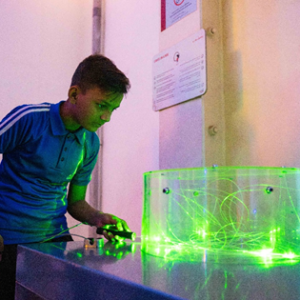
Unlike ordinary light, laser light travels in one direction and doesn’t scatter which is why it can be so powerful.
Light in Everyday Technology
From smartphone screens to solar panels, modern life runs on light. Cameras capture images using light. Plants grow through photosynthesis, converting sunlight into energy. Even scientists exploring space learn about distant stars by studying the light they emit.
Understanding light helps engineers, doctors, and researchers design safer, smarter, and more sustainable technologies.
Why Learning About Light Matters
Exploring how light works encourages curiosity, creativity, and problem-solving. These skills are the heart of science education. When students experiment with prisms, mirrors, or lasers in a safe setting, they discover how invisible scientific principles shape the visible world.
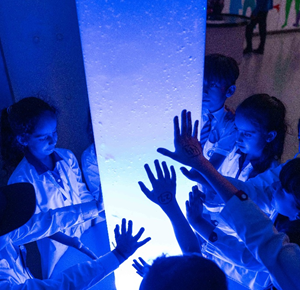
Light doesn’t just brighten our surroundings; it illuminates the future.
Visit MagnifiScience Centre and Explore Light in Real Life
At the MagnifiScience Centre, you can experiment with mirrors, prisms, lenses, and interactive light exhibits. These exhibits show how light interacts with different materials to make objects visible and how it shapes our surroundings. They also explain how the eyes and brain process light signals, allowing us to form images and experience the full range of colours.
It’s a fun, hands-on way for children, families, and curious learners to experience the science of light beyond the textbook.